



With five regular-season games left, two teams separated by four games in the Big Ten standings arrive at Mackey Arena on Friday, February 20th, at 8 p.m. EST, carrying vastly different tournament trajectories. Purdue sits comfortably in the top 10 nationally, chasing a top NCAA tourney seed and carrying the weight of a 74-poll ranking streak.
Indiana arrives needing signature wins to solidify its at-large resume after dropping a 71-51 decision at Illinois last Sunday. The Hoosiers stunned the Boilermakers 72-67 in Bloomington on January 27th, when Lamar Wilkerson and Nick Dorn combined for 37 points. Purdue has won nine of the last 10 meetings on its home floor and has held Indiana below 80 points for 21 straight matchups dating to 2013.
| Metric | Indiana Hoosiers | Purdue Boilermakers |
|---|---|---|
| Record (Conf) | 17-9 (8-7, 10th in Big Ten) | 21-5 (11-4, 3rd in Big Ten) |
| Points Per Game | 80.3 (92nd) | 82.5 (55th) |
| Points Allowed | 71.3 (114th) | 69.5 (72nd) |
| Offensive Rating | 117.2 (51st) | 123.3 (8th) |
| Defensive Rating | 104.1 (130th) | 103.8 (123rd) |
| 3-Point % | 35.1% | 37.2% |
| Field Goal % | 46.2% | 48.5% |
| Free Throw % | 75.8% | 77.3% |
| Turnovers/G | 12.5 | 10.8 |
|
Key Advantage
Purdue’s 2nd-ranked assist-to-turnover ratio and 3rd-ranked assists per game create systematic breakdowns against Indiana’s 114th-ranked defense. The 148.5 total prices Mackey as a defensive environment, but the Boilermakers’ 55th-ranked scoring and the Hoosiers’ perimeter volume threaten to push the pace.
|
||
Market Analysis
The consensus prices Purdue as a -10.5 favorite with a 148.5 total, implying an 82.69% win probability for the Boilermakers. The moneyline sits at -650 for Purdue and +470 for Indiana. These figures reflect Purdue’s 9th-ranked Simple Rating System against Indiana’s 31st, plus home-court advantage at one of the Big Ten’s most hostile venues.
The market’s total alignment reveals a structural assumption: that Mackey Arena suppresses scoring and that Indiana’s 71.3 points allowed indicate defensive competence. Both premises warrant scrutiny. Purdue ranks 8th nationally in points per 100 possessions despite playing the 6th-toughest schedule. Their offensive infrastructure, led by Braden Smith’s 8.8 assists per game and Fletcher Loyer’s 66 made three-pointers, creates matchup problems that Indiana’s 130th-ranked defensive rating struggles to contain.
The first meeting’s 139-point total and Indiana’s 72-67 victory established that these teams can be in the 70s. Purdue’s defensive rating of 103.8 ranks only marginally better than Indiana’s 104.1, and the Boilermakers have allowed 69.5 points per game against elite competition. The gap between Purdue’s 8th-ranked offensive production and Indiana’s 51st creates a pace dynamic that favors possessions.
Lamar Wilkerson’s Scoring Surge Tests Purdue’s Perimeter Defense
The most compelling individual matchup in this rivalry game features Lamar Wilkerson against a Purdue defense that has struggled to contain elite scoring guards. Wilkerson has scored 20-plus points in five consecutive games and has reached that threshold 10 times in Big Ten play. His 24.2 points per game in conference action trails only George McGinnis’s 1970-71 season for the highest Hoosier scoring average in league play. He has shot 48.2% from the field and 39.9% from three in Big Ten games, combining volume with efficiency in ways that stress defensive schemes.
Purdue’s defensive approach under Matt Painter prioritizes positioning and rebounding over aggressive perimeter pressure. The Boilermakers rank 27th in defensive efficiency nationally, but have allowed productive games to dynamic wings throughout the season. Wilkerson’s movement without the ball and his ability to score in transition create challenges that Purdue’s methodical defensive system must address. The absence of sustained full-court pressure could allow Wilkerson to establish rhythm early, particularly given Indiana’s 10.2 made three-pointers per game and their 32nd national ranking in perimeter volume.
The supporting cast around Wilkerson provides necessary spacing. Tucker DeVries has contributed double-figure scoring in multiple conference games, and Nick Dorn’s 18-point performance in the first meeting demonstrated Indiana’s capacity for secondary production. Purdue’s task extends beyond containing Wilkerson to preventing the synergistic effects that occur when IU’s perimeter threats stretch defensive rotations.
Purdue’s Revenge Position and Mackey Intimidation
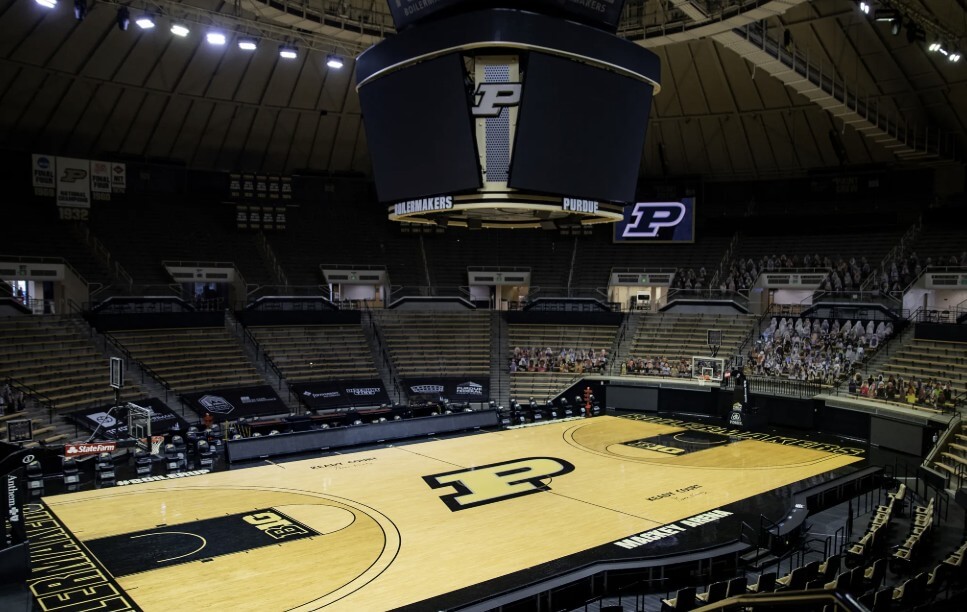
The Boilermakers enter this game carrying the psychological weight of their January loss in Bloomington, combined with the motivational advantage of avenging that defeat on their home floor. Purdue has won nine of the last 10 meetings at Mackey Arena and is 17-4 as a ranked team against Indiana in this venue. The 14,876-seat arena creates a decibel environment that disrupts offensive communication and compresses visiting shooting percentages.
Purdue coach Matt Painter’s squad has navigated eight Quad-1 victories this year, and his 21-year tenure provides institutional knowledge of this rivalry’s emotional contours. The Boilermakers have responded to their five losses this season with characteristic resilience, and their three-game homestand positioning suggests this is a targeted recovery spot. The following game against Michigan State looms, but Indiana represents the immediate emotional priority given the season-series stakes.
The structural advantage extends to Purdue’s roster construction. Trey Kaufman-Renn’s 9.1 rebounds per game provide interior control that limits Indiana’s second-chance opportunities, while Smith’s assist leadership generates efficient possessions that limit transition opportunities. The Boilermakers’ 1st-ranked assist-to-turnover ratio means they rarely beat themselves, a critical factor in games where emotional intensity elevates mistake consequences. Indiana’s 12.5 turnovers per game against this disciplined attack could prove decisive if the Hoosiers fall behind early and face pressure to accelerate the pace.