
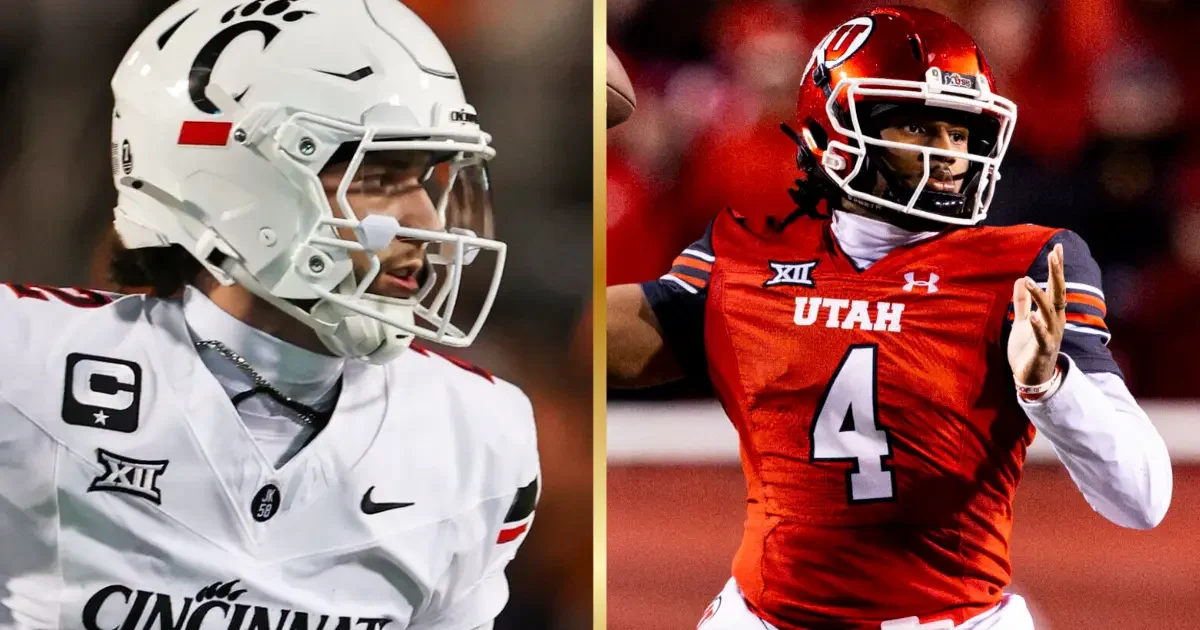


In a matchup of ranked Big 12 contenders, a significant statistical anomaly suggests the market price may not fully capture the underlying efficiency gap between the No. 24 Utah Utes and the No. 17 Cincinnati Bearcats. While both teams boast impressive records, the predictive power ratings indicate a fundamental difference in team quality that a double-digit spread only begins to address, particularly given a key injury for the road underdog.
Market Analysis
The market has established Utah as a consensus 10.5-point favorite, with some shops showing -10 at increased juice. This price reflects Utah’s formidable home-field advantage at Rice-Eccles Stadium, its top-tier national rankings on both sides of the ball, and Cincinnati’s status as a quality, ranked opponent. The line’s stability around the key number of 10 suggests a balanced flow of action, with the market acknowledging Utah’s superiority but respecting Cincinnati’s 7-1 record and offensive firepower. The total is hovering at 55.5, pricing in two potent offenses against one elite defensive unit.
| Metric | Cincinnati | Utah |
|---|---|---|
| SP+ Rating (Rank) | 14.3 (23rd) | 20.9 (7th) |
| Offense SP+ (Rank) | 35.7 (19th) | 34.6 (25th) |
| Defense SP+ (Rank) | 21.8 (38th) | 13.9 (7th) |
| Scoring Offense (Rank) | 38.3 PPG (13th) | 38.9 PPG (11th) |
| Scoring Defense (Rank) | 19.0 PPG (28th) | 14.3 PPG (9th) |
| Rushing Offense (Rank) | 195.4 YPG (31st) | 267.1 YPG (5th) |
| Rushing Defense (Rank) | 140.9 YPG (64th) | 136.6 YPG (56th) |
| Team Talent Composite (Rank) | 61st | 40th |
The Utes’ Analytical Dominance and Trench Warfare Advantage
The primary case for Utah covering a significant number is rooted in superior efficiency metrics. The 6.6-point gap in SP+ rating between Utah (20.9, 7th) and Cincinnati (14.3, 23rd) is substantial, suggesting a power differential greater than their respective rankings imply. This is most pronounced in the critical matchup between Cincinnati’s offense (SP+ Rank 19th) and Utah’s defense (SP+ Rank 7th). Elite defenses consistently disrupt merely ‘good’ offenses, and Utah’s unit has the profile to do just that.
Furthermore, the Utes’ path to controlling the game script is clear: a relentless ground attack. Utah ranks 5th in the FBS with 267.1 rushing yards per game, a strength that directly attacks Cincinnati’s middling run defense (64th). This advantage is compounded by the confirmed absence of Bearcats leading rusher Evan Pryor, which severely hampers Cincinnati’s offensive balance and its ability to sustain drives. Utah’s edge in time of possession (27th vs. Cincinnati’s 135th) is likely to be exacerbated, wearing down the Bearcats’ defense and leveraging Utah’s superior Team Talent Composite for second-half separation.
Bearcats’ Ball Security Offers a Path to Backdoor Viability
Despite the daunting analytical picture, Cincinnati possesses the offensive profile to remain within a double-digit margin. Quarterback Brendan Sorsby has been remarkably efficient, posting 19 touchdowns to just 1 interception on the year. An offense that avoids turnovers can mitigate mismatches and prevent the short fields that often lead to blowout losses. While Utah’s defense is elite, Sorsby’s decision-making provides a bulwark against self-inflicted wounds.
Additionally, the Bearcats have been lethal in scoring territory, ranking 4th nationally in red zone offense. If they can manufacture a few sustained drives against the Utes’ defense, their ability to convert those opportunities into touchdowns is crucial for covering a large spread. Cincinnati has also been a strong performer against market expectations, posting a 6-2 ATS record. This demonstrates a pattern of outperforming their power rating, and the market may be over-adjusting for Utah’s home-field environment against a team that has proven its mettle all season.