



Four of Vanderbilt’s six defeats have come by a combined 10 points, a razor-thin margin that establishes the psychological stakes for Wednesday’s Senior Night at Memorial Gymnasium. The Commodores host Georgia in a clash between two NCAA Tournament-bound programs, with tipoff set for tonight, February 25th, at 7 p.m. EST on SEC Network. The Bulldogs arrive with momentum after defeating Kentucky at Rupp Arena and Texas at home, positioning them one win shy of a third straight 20-win season for only the third time in program history.
| Metric | Georgia Bulldogs | Vanderbilt Commodores |
|---|---|---|
| Record (Conf) | 19-8 (7-7) | 21-6 (8-6) |
| Points Per Game | 90.2 (4th) | 87.2 (12th) |
| Points Allowed | 78.4 (305th) | 73.7 (182nd) |
| Offensive Rating | 120.1 (25th) | 121.1 (17th) |
| Defensive Rating | 104.4 (131st) | 102.4 (78th) |
| 3-Point % | 32.8% (253rd) | 36.2% (62nd) |
| Offensive Rebounds/G | 13.6 (17th) | 10.6 (203rd) |
| Blocks/G | 6.4 (1st) | 5.1 (16th) |
| Assists/G | 14.9 (123rd) | 16.7 (43rd) |
| Steals/G | 8.5 (38th) | 8.6 (37th) |
|
Key Advantage
Georgia’s offensive rebounding margin (13.6 to 10.6) and Somto Cyril’s national-leading shot-blocking presence (6.4 blocks per game) create defensive resistance Vanderbilt has not faced recently. The -8.5 assumes the Commodores solve problems that have plagued them in close losses.
|
||
Market Analysis
The consensus line of Vanderbilt -8.5 with a total of 165.5 implies a Commodore victory probability of 78.44%, pricing in both home-court advantage and a talent gap that the raw statistics do not fully support. Vanderbilt’s 102.4 defensive rating (78th nationally) is solid but not elite, while Georgia’s 120.1 offensive rating (25th nationally) suggests the Bulldogs can score against this level of resistance. The total anticipates a track meet between two top-25 scoring outfits.
The statistical divergence centers on defensive vulnerability. Georgia allows 78.4 points per game (305th nationally), creating a path for Vanderbilt’s efficient offense to exceed its average. Yet the Commodores’ own defensive metrics have softened in recent tight defeats, surrendering late leads against Tennessee and others. The primary risk to positioning on Georgia is Vanderbilt’s perimeter shooting: at 36.2% from three (62nd nationally) against Georgia’s 32.8% (253rd nationally), the Commodores own a spacing advantage that could stretch the Bulldog defense beyond its limits. If Vanderbilt converts from deep at its season rate, the -8.5 becomes achievable. If the shots rim out, Georgia’s transition game (leading the nation in fastbreak points at 20.9 per game) keeps this within the number.
Cyril’s Shot-Altering Presence vs. Vanderbilt’s Interior Attack
Somto Cyril leads all Division I programs with 71 dunks and paces Georgia’s nation-leading shot-blocking unit at 6.4 rejections per game. His 74.6% field-goal percentage, a school record, transforms defensive stops into immediate transition opportunities for a team that generates 20.9 fastbreak points nightly. Vanderbilt’s interior offense, reliant on two-point production at a 57.4% clip (37th nationally), encounters its most significant rim-protector of the season.
The Commodores compensate through ball movement. Their 16.7 assists per game (43rd nationally) against Georgia’s 14.9 (123rd nationally) indicates a deliberate offensive structure designed to force help rotations and exploit closeout angles. Tyler Nickel and Devin McGlockton, two of four seniors honored tonight, have anchored a resurgence, producing 41 wins over two seasons. Their collective experience in pressure moments contrasts with Georgia’s youth-dependent rotation, where 11 players average double-figure minutes but no single creator dominates late possessions.
Senior Night Pressure and the Close-Game Regression
Vanderbilt’s four losses by a combined 10 points create a psychological inflection point rather than a statistical trend to exploit. The Commodores led Tennessee with under a minute remaining Saturday, exchanging the lead 20 times in a game decided by a single possession. Those narrow margins reflect a team that executes in clutch moments but has encountered unfortunate variance, not one that collapses under pressure.
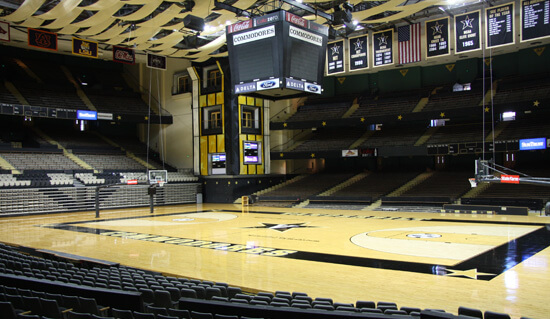
Georgia enters with inverse momentum, having won consecutive games against NCAA Tournament-caliber opposition. The Bulldogs’ 86-78 victory at Rupp Arena marked just their fifth win in 45 trips to Lexington, a result that validates their capacity for road performance against NCAA-caliber defenses. Jeremiah Wilkinson’s 17.3 points per game and Blue Cain’s 68 consecutive starts provide continuity that Vanderbilt’s rotation, despite its senior leadership, has not always maintained through tight second halves. The venue matters: Memorial Gymnasium’s distinctive court dimensions and raised floor create defensive advantages for home teams familiar with its geometry, though Georgia’s pace-heavy approach (66.4 field-goal attempts per game, second nationally) minimizes the impact of half-court defensive positioning.