
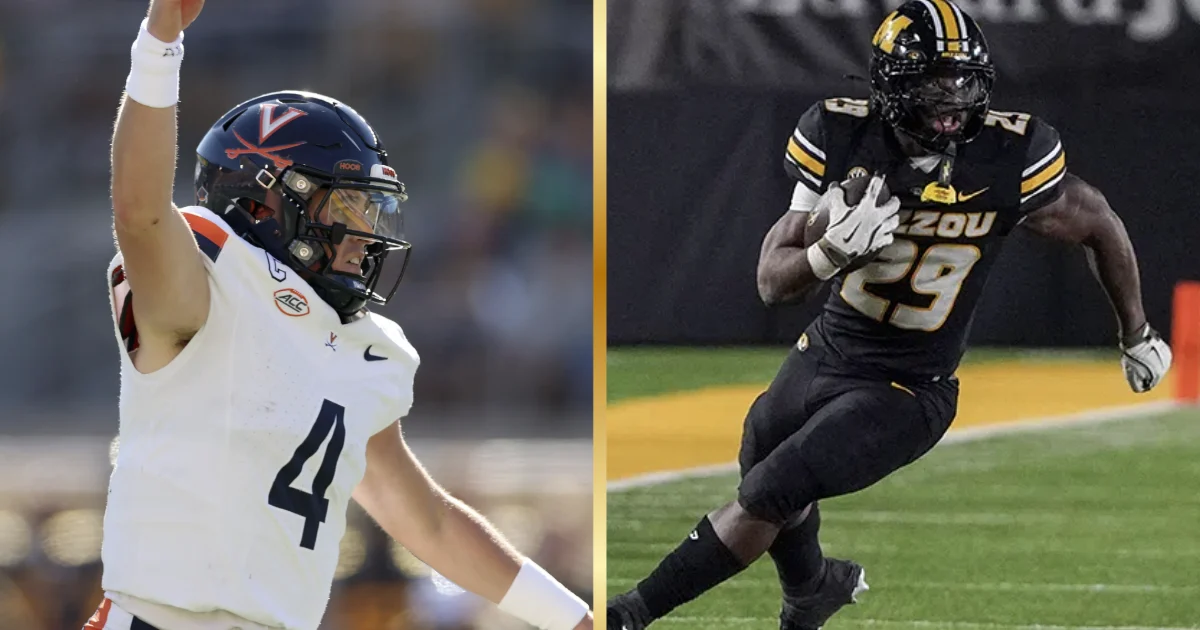


A compelling non-conference matchup concludes the bowl season for two motivated programs as the Virginia Cavaliers face the Missouri Tigers in the Gator Bowl. The action is set to unfold in Jacksonville, Florida, tonight, December 27th, at 7:30 PM EST. Virginia enters seeking a program-record 11th win after a narrow loss in the ACC Championship, while Missouri looks to cap a successful season under coach Eli Drinkwitz, albeit with a significantly altered roster due to transfers and injuries.
Market Analysis
The current betting landscape assigns the Missouri Tigers a 64.66% implied win probability, a figure that appears anchored to their full-season performance rather than their current roster. The spread market has settled with Missouri as a -4.5 point favorite at -105 odds, while Virginia is priced at -116 to cover +4.5 points. This pricing suggests operators expect Missouri to win by more than a field goal but less than a touchdown. Furthermore, the total is set at a low 43.5 points, indicating an expectation of a defense-heavy, methodical game script.
However, there is a distinct discrepancy between this consensus and the on-field reality. The pricing does not seem to fully discount the impact of Missouri starting a freshman quarterback and missing several key offensive contributors. This creates a potential mathematical edge, as the Cavaliers’ 39.53% implied probability of winning outright is understated given the significant personnel changes for their opponent.
Missouri’s Roster Volatility vs. Virginia’s Stability
The most significant variable impacting this matchup is the wave of opt-outs and injuries, which disproportionately affects Missouri. The Tigers will be without starting quarterback Beau Pribula, who entered the transfer portal, thrusting freshman Matt Zollers into his first career start.
Zollers has limited experience, completing just 35 passes all season. Compounding this issue are the absences of key offensive weapons, including wide receivers Josh Manning and Marquis Johnson, along with tight end Brett Norfleet. While running back Ahmad Hardy, who is chasing a school rushing record, provides a formidable threat, the offense becomes predictable and one-dimensional with an inexperienced quarterback at the helm
Conversely, Virginia, while not entirely unscathed, maintains more continuity at critical positions. Their motivation is also a tangible factor; after the heartbreak of an overtime loss in the ACC Championship, securing a program-first 11th win offers a powerful incentive that contrasts sharply with a Missouri team turning the page to 2026 by giving depth players more reps.
A Tactical Grind Favoring the Underdog
The game’s tactical dynamic appears to favor the team with the completer and more experienced offensive unit. Virginia’s primary defensive task is clear: slow down Missouri running back Ahmad Hardy. The Cavaliers’ run defense, which ranks 22nd nationally by allowing just 111.1 yards per game, is well-equipped for this challenge. By forcing the freshman Zollers into obvious passing situations, Virginia’s defense, backed by a Top-30 SP+ rating, can leverage the pressure.
A critical statistical divergence supports the Cavaliers’ case: Virginia boasts a +5 turnover margin (34th in FBS), while Missouri has struggled with ball security, posting a -5 margin (104th in FBS). Against a young quarterback, this advantage in turnover differential could prove decisive. While Missouri’s defense is elite, ranking 9th in total yards allowed, Virginia’s offense is balanced enough under quarterback Chandler Morris to sustain drives and control possession, a key element in neutralizing the Tigers’ ground attack and keeping their own defense fresh.